Water that will not drain
Water still standing about two days after rain points to drainage, slope or clogged-outlet problems.
FOR TPO, MODIFIED BITUMEN & BUILT-UP ROOFS
A flat roof depends on its membrane, its seams and how fast water drains away. Most repairs start where one of those three has failed.
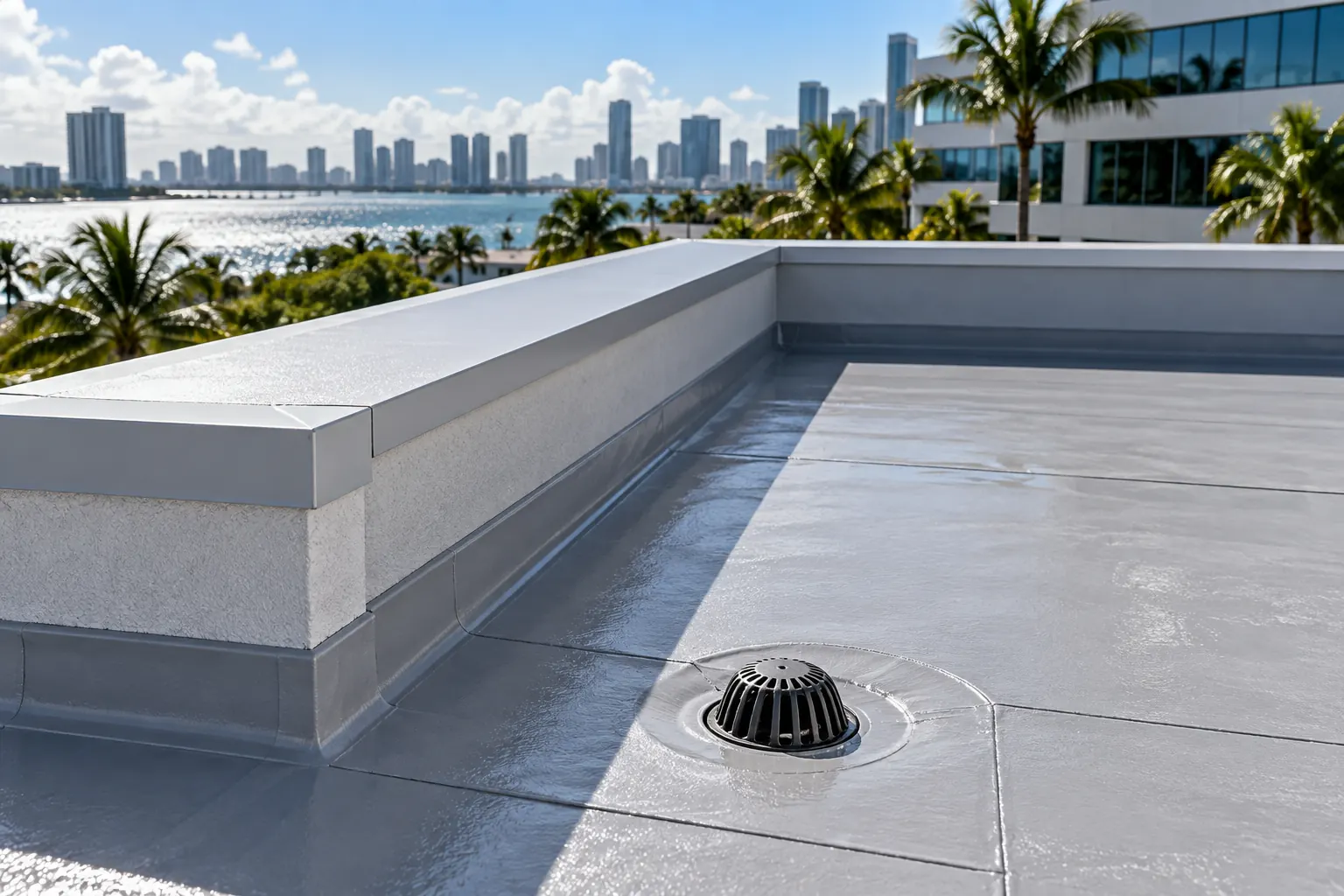
DOM or a roofing partner will confirm the appropriate scope. CONCEPT IMAGE · NOT A DOM PROJECT
RECOGNIZE THE SIGNALS
The right next step depends on what the roof is doing and what an inspection reveals.
Water still standing about two days after rain points to drainage, slope or clogged-outlet problems.
Separated seams, bubbles in the membrane or surface cracking let water reach the insulation below.
Parapet flashing, curbs under AC units and pipe penetrations are frequent leak points on flat roofs.
A CLEAR SCOPE BEFORE A DECISION
Expect the membrane type, the exact areas and details to be repaired, how seams or flashing will be sealed, whether wet insulation was found and needs replacing, drainage corrections and any permit requirement.
COMPARE FLAT ROOFING SYSTEMSTHE DETAILS THAT CHANGE THE ANSWER
Membrane, seams, flashing and drainage are reviewed together, because a leak at one point is often caused by water held somewhere else.
Surface wear, punctures, blisters and seam adhesion across the field of the roof.
Clogged outlets, ponding areas, parapet and edge flashing, and equipment curbs.
KNOW THE MEMBRANE
TPO is a single-ply thermoplastic membrane with heat-welded seams; repairs usually involve cleaning and welding a matching patch. Modified bitumen comes in rolled sheets that are torched, self-adhered or set in adhesive, and is repaired with compatible sheets and flashing. Built-up roofs use several layers of felt and asphalt with a surfacing, and repairs rebuild those layers locally.
Using an incompatible material can make a repair fail early, so the estimate should name the existing membrane and the repair product. Compare the systems on the flat roofing systems page.
DRAINAGE COMES FIRST
Flat roofs are not truly flat; they need a slight slope toward drains, gutters or scuppers. When water sits for days, it adds weight, speeds up membrane wear and finds any small opening. Clearing outlets, correcting low areas with tapered insulation or adding drainage can be part of a lasting repair.
After Miami's heavy afternoon storms, check that drains and scuppers are flowing. Leaves, debris and roofing granules collect at outlets and can turn a small roof into a shallow pool.
WET INSULATION AND THE BIGGER DECISION
Water that gets below the membrane can soak the insulation without showing inside right away. Core samples or an infrared moisture survey can show how much of the roof is wet. Small wet areas can be cut out and replaced during a repair; wide areas change the decision.
Where the roof and insulation are still dry and sound, a restoration coating may extend its life. Where they are not, replacement is usually the better investment. For business properties, see commercial roof repair in Miami; for homes with low-slope sections, the same principles apply on a smaller scale. Miami-Dade County's roofing permit resources explain the county process; cities such as Miami, Hialeah or Coral Gables run their own building departments, so the responsible jurisdiction is confirmed by address.
Patches, seam welds and flashing repairs when the rest of the roof is sound.
A compatible coating system over a dry, sound roof where it is permitted.
A new membrane and insulation when moisture or wear is widespread.
A MORE SPECIFIC STARTING POINT
Leaks, seams, flashing and drains on business roofs, repaired around tenants, stock and operations.
ROOFING SERVICEActive leaks and storm damage traced to the real entry point before a repair is proposed.
ROOFING SERVICEA documented look at roof condition before a repair, a purchase, an insurance renewal or a larger project.
MATCH THE WORK TO THE ROOF
Repair, replacement and commercial work start with the existing assembly. Compare these materials before deciding what the job needs.
QUESTIONS WORTH ASKING
Clear answers make it easier to choose the right next step for your property.
Water that is still present about 48 hours after rain is generally considered ponding and should be evaluated for drainage or slope problems.
Yes. TPO is typically repaired by cleaning the area and heat-welding a compatible patch, provided the surrounding membrane is in good condition.
A coating can help when the roof and insulation below are dry and sound. It does not fix wet insulation or structural drainage problems.
Many do, especially on additions, porches and modern designs. Residential low-slope sections use the same membrane principles as commercial roofs.
Yes. Request a free initial roof inspection and estimate from DOM.
BEFORE THE ISSUE GROWS
Tell DOM about your property and the concern you want answered.