Leaks over operations
Drips over stock, workstations or tenant spaces call for a fast, documented assessment.
FOR OFFICES, WAREHOUSES & RETAIL
When a commercial roof leaks, the cost is measured below it: stock, tenants, equipment and downtime. A focused repair starts with where the water is going.
DOM or a roofing partner will confirm the appropriate scope. CONCEPT IMAGE · NOT A DOM PROJECT
RECOGNIZE THE SIGNALS
The right next step depends on what the roof is doing and what an inspection reveals.
Drips over stock, workstations or tenant spaces call for a fast, documented assessment.
Open seams, loose perimeter metal and failed curb flashing are the most common commercial leak sources.
Clogged drains and ponding add load and speed up membrane wear across the roof.
A CLEAR SCOPE BEFORE A DECISION
A clear proposal lists the leak locations and causes found, the repair method and materials, wet insulation to replace, access and safety plans, work hours and the party contracting and performing the work.
EXPLORE COMMERCIAL ROOFINGTHE DETAILS THAT CHANGE THE ANSWER
Large roofs hide water well. Matching interior leak points to the roof above, then checking the details around them, keeps the repair focused.
Record where, when and in which weather leaks appear. Patterns help narrow down the roof area involved.
HVAC curbs, exhaust fans, skylights, pipe supports and parapets get a close look because they interrupt the membrane.
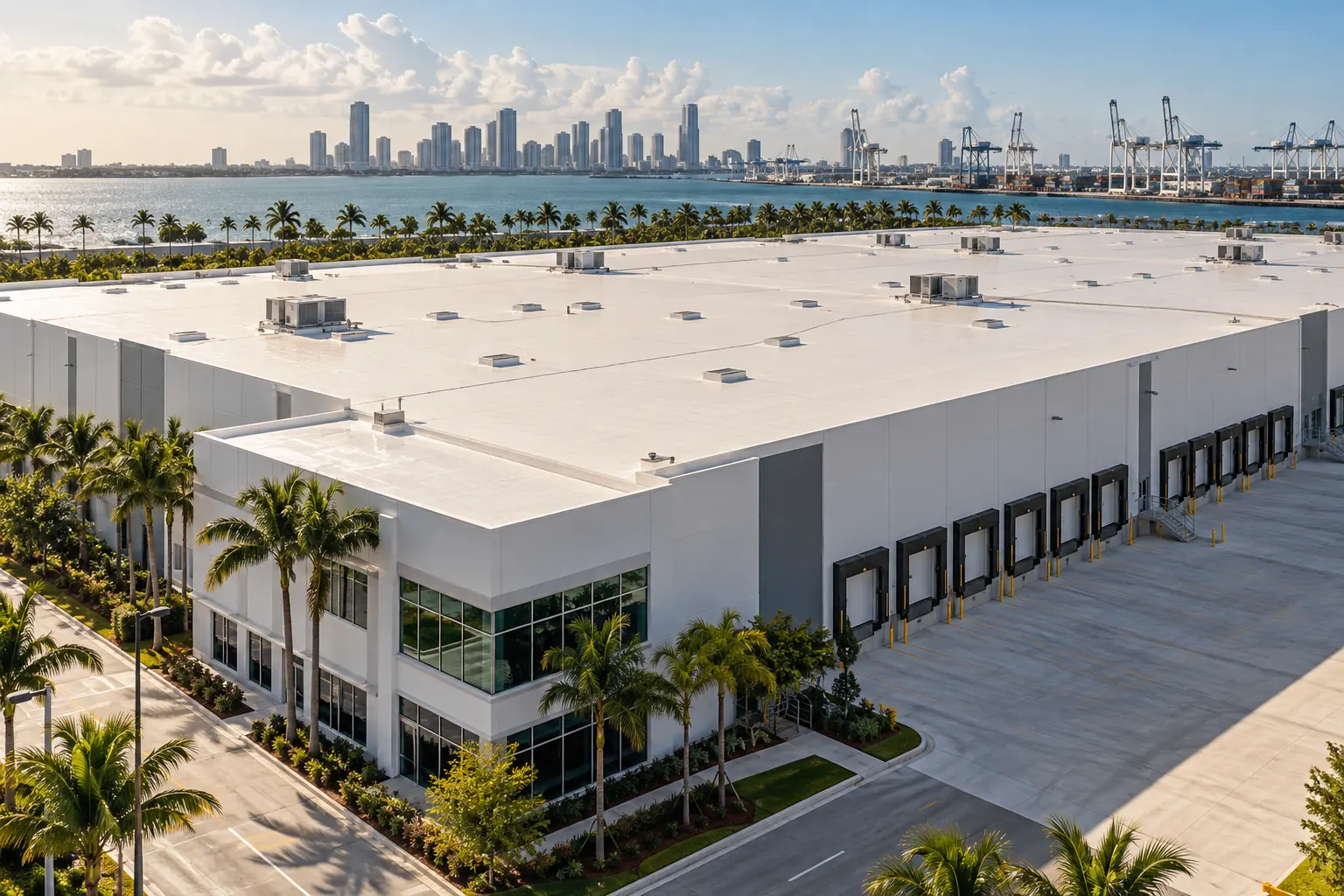
WHERE COMMERCIAL ROOFS LEAK
On TPO, modified bitumen and built-up roofs, the membrane between details usually lasts longest. Leaks tend to start at seams, at the perimeter and parapets, around HVAC curbs and rooftop units, at pipe and conduit penetrations, at skylights and at drains. Metal roofs on warehouses and industrial buildings typically leak at panel laps, fasteners, ridge caps and gutters.
Foot traffic from equipment service crews is a frequent cause of punctures. Walkway pads and a simple rule about who goes on the roof can prevent repeat damage. Compare membrane options on the flat roofing systems page and see flat roof repair in Miami for membrane-specific repair methods.
WARRANTIES, PERMITS AND RECORDS
If the roof is covered by a manufacturer warranty, read its terms first; some warranties require repairs by authorized contractors or prior notice. Keep repair records with photos, because they help with future warranty questions, maintenance planning and property sales.
Miami-Dade County's roofing permit resources explain the county process; cities such as Miami, Hialeah or Coral Gables run their own building departments, so the responsible jurisdiction is confirmed by address. The repair proposal should say whether a permit is included.
PLANNED AROUND THE BUILDING
A commercial repair plan should state how the crew reaches the roof, where materials are staged, how open areas are protected from rain, how equipment is protected and when work can happen. For occupied buildings, ask who notifies tenants and how odors from adhesives or torches will be managed.
DOM coordinates commercial roof repair through its team or roofing partners, depending on the building and the work. The party that inspects, quotes, contracts and performs the repair is named before the job proceeds. If repairs keep returning or moisture is widespread, compare a larger scope on commercial roofing in Miami.
Leak log, roof walk, details and, where needed, moisture testing.
Repair scope, materials, access, schedule and responsible party in writing.
Work completed around operations, with photos for your records.
A MORE SPECIFIC STARTING POINT
Offices, warehouses, retail and multi-unit roofs scoped around drainage, equipment and operations below.
ROOFING SERVICEPonding, open seams, blisters and leaks on TPO, modified bitumen and built-up low-slope roofs.
ROOFING SERVICEA documented look at roof condition before a repair, a purchase, an insurance renewal or a larger project.
MATCH THE WORK TO THE ROOF
Repair, replacement and commercial work start with the existing assembly. Compare these materials before deciding what the job needs.
QUESTIONS WORTH ASKING
Clear answers make it easier to choose the right next step for your property.
Often, yes. Access, staging, work hours and protection of occupied areas should be planned in the proposal.
Seams, perimeter flashing, HVAC curbs, penetrations and drains. Foot traffic from equipment service is another common cause of punctures.
It can. Check the warranty terms before work begins, since some require authorized contractors or notice to the manufacturer.
DOM accepts requests for metal and low-slope commercial roofs and confirms the responsible team and scope for each building.
Yes. Request a free initial commercial roof inspection and estimate from DOM.
BEFORE THE ISSUE GROWS
Tell DOM about your property and the concern you want answered.